
When I was still in Software Engineering at Bosch Software Innovations five years ago, I thought being a Product person was straight-forward –
Isn’t Product Management just about writing user stories and conducting sprint plannings?
In 2015, I was assigned to be the first Product Owner based in our Singapore office, reporting to our Chief Product Owner in Immenstaad, Germany. Two years later, I got head-hunted to join General Electric’s Digital Innovation as a Senior Product Manager. Here is what I have learnt.
Analytics
What do the Dyson vacuum cleaner, Starbucks, Instagram, GoPro, Facebook, and Lululemon yoga pants have in common?
In the early digital days, most products are borne out of a hunch. They were not the results of data-driven analytics, corporate brainstorming sessions, but a hunch — the intuitive understanding of a deep, unmet need.
But intuition alone is not sufficient. Once the idea is crystallised, product analytics is then used to analyse demand, user behaviour, improve customer experiences, find optimal pricing, etc
Take E-commerce for example. All leading marketplaces (Lazada, Redmart, Alibaba, Sephora, Zalora, Nike, etc) analyzes user page navigation and clicks in order to better position themselves to sell more effectively.
Business Model
If You Fail to Plan, You Plan to Fail
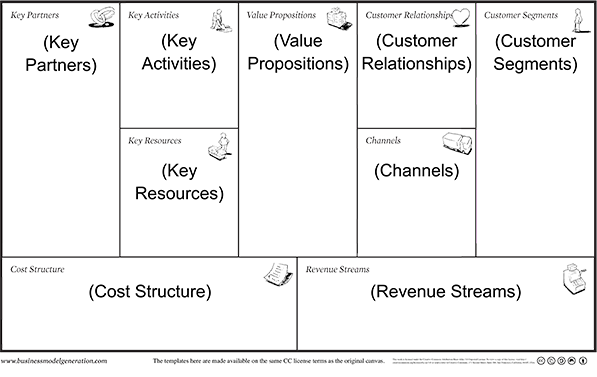
Every successful product needs a plan. These days, business canvases are used to create light-weight one-page plans. The good thing is — You don’t need an MBA to know how to fill these sections up.
Collaboration, Coordination and Confidence
Product Management is 60% Hard skills, 40% Soft skills.
A large chunk of the 40% soft skills lies in the ability to effectively collaborate with stakeholders, cross-functional teams and external vendors(if any).
Great ideas are useless if you cannot convince the crowd
I have experienced countless of potentially great product ideas and features failing to materialise due to the lack of confidence and persuasion.
As a Product Manager, your role is to represent your ideas with great confidence, coordinate initiatives and collaborate to the best effort you can.
Design and Development
Having been a technical programmer, architect and designer for a good decade, I definitely appreciate my technical skills, especially building technical software products for developers.
While technical skills are not necessary for most consumer products, it definitely helps to be able to speak the same language as your technical team. For me, I like to allocate a day per week (mostly Fridays) to catch up with my technical team. I am always surprised by the great ideas that they churn out.
Empathy and Experience
Having a high EQ is a double-edged sword. On one hand, you are constantly worried on hurting feelings, on the other hand, you are blessed with the ability to understand your customers. To build products that demonstrates care for users, product managers need a decent level of empathy.
Nothing beats experience when owning a product. From design and development to shipping and support, having been there and done that is extremely vital to the success of the product. I recommend earning experience from side-projects and following mentors to accelerate your success rate as a digital product manager.

 The Technical Product Manager